What Is Virtual Address
What is virtual address. Learn what is a virtual address, how it works, and why global founders use it for EU company formation, privacy, and compliance

You're comparing company formation options, working remotely, and wondering why every checklist keeps asking for a street address. You don't plan to rent an office, yet a home address may expose your privacy and a P.O. box may fail a bank or registry check. That's where the question what is a virtual address becomes practical, not theoretical.
A virtual address gives your company a real, service-enabled business address for mail, official correspondence, and sometimes registration. It doesn't automatically give you a desk, staff, premises, or permission to replace every legally required address. The important distinction is between the address used for legal administration and the place where your business physically operates.
Table of Contents
- Why Non-Resident Founders Care About a Virtual Address
- What a Virtual Address Actually Is
- Legal Address Versus Trading Address Explained
- How Different EU Countries Treat Virtual Addresses
- Why Bulgaria and FastCorp Make a Strong Fit
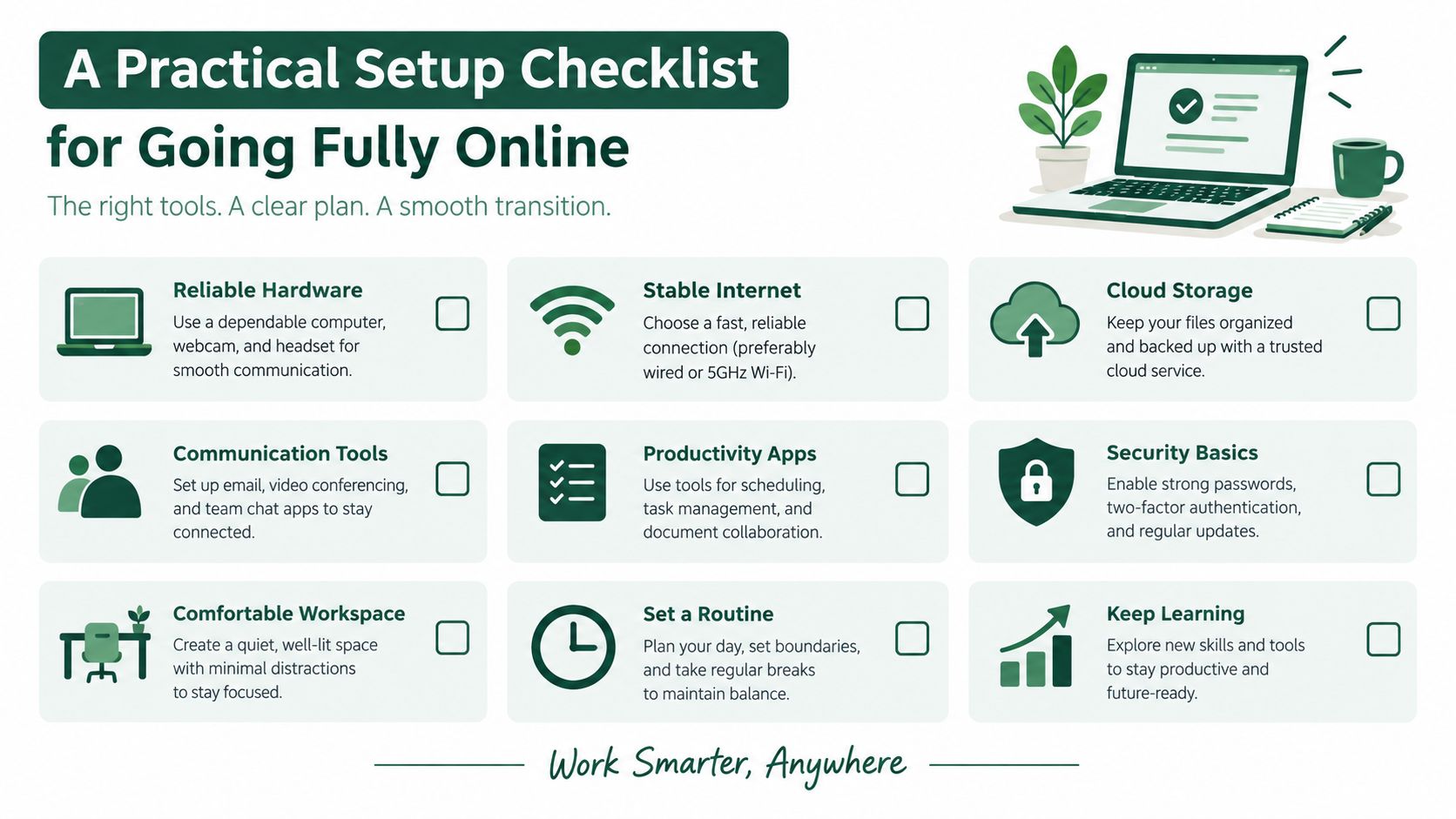
- A Practical Setup Checklist for Going Fully Online
- Common Pitfalls That Catch Founders Off Guard
- Picking the Right Virtual Address Setup for 2026
Why Non-Resident Founders Care About a Virtual Address
A developer in Lagos is comparing a GmbH in Berlin, an Ltd in London, and an EOOD in Sofia. Before choosing a bank, accountant, or office plan, there's a simpler question: which street address will appear on the incorporation documents?
That choice anchors the company in a jurisdiction. It influences where official notices arrive, which local procedures apply, and how easily the founder can manage administration from abroad. A remote company still needs a dependable point where a court, tax authority, bank, or client can send formal correspondence.
For a non-resident founder, three practical concerns usually appear together:
- Bank onboarding: A corporate bank account normally requires an address that can be verified and connected to the company.
- Legal communication: EU banks, clients, and authorities need a reliable place to serve notices and deliver statutory mail.
- Lean operations: A virtual setup lets the company avoid committing to a dedicated office before the business needs one.
The address therefore isn't decorative text on a registration form. It's part of the company's operating infrastructure. If mail disappears, the provider can't confirm occupancy, or the address isn't suitable for the company's legal role, the founder may miss deadlines or face additional compliance work.
Practical rule: Treat the address as a foundation for incorporation and administration, not as a substitute for genuine business activity.
A good starting point is to understand how the address connects with broader business compliance responsibilities. Once that relationship is clear, choosing between Sofia, Berlin, London, or another location becomes a structured decision rather than a search for the cheapest mailbox.
What a Virtual Address Actually Is
The simplest definition is this: a virtual address is a real street address at a commercial location where a provider receives business mail for you. Your company uses the address, but it doesn't necessarily rent an exclusive office there.
Think of a personal mailbox at a courier point. You give people one stable location, the courier receives your letters, and you decide whether to collect them, have them forwarded, or view digital copies. A business virtual address adds a professional street address and a service process around that basic idea.
A provider may:
- receive ordinary and registered mail;
- notify you when correspondence arrives;
- scan letters and upload them securely;
- forward physical documents to another country;
- store originals for later collection;
- accept parcels or sign for deliveries, where the service permits it.
The address is physical, while your use of the location is virtual. That's why it differs from several services that are often confused with it.
| Service | What you receive | What you usually don't receive |
|---|---|---|
| Virtual address | Street address and mail handling | Dedicated desk or permanent office |
| Coworking membership | Workspace and shared facilities | Automatic legal mail administration |
| Home address | Your own residential location | Privacy from public business records |
| Print-shop mailbox | Basic mail collection | Assured statutory support or company-registration suitability |
A virtual address also isn't automatically a registered agent or registered office. Some jurisdictions accept it for one role but require a separate arrangement for legal service. Providers and authorities must be able to verify the location and the authorization to use it when needed. For a fuller distinction between an address and an office package, review this guide to virtual offices and registered addresses.
Legal Address Versus Trading Address Explained
Two addresses can serve the same company without serving the same purpose.
The registered office, sometimes called the legal address, is the location recorded in the commercial register. Authorities use it for statutory notices, tax correspondence, and service of process. It must be a real, accessible location in the country where the company is registered, and the provider must be prepared to handle formal documents rather than only advertising mail.
The trading address describes where the company conducts its commercial activity. That could be the founder's home, a coworking space, a warehouse, a shop, or a client site. It may be in another country, provided the company's operational, tax, and licensing position supports that arrangement.
Consider a Bulgarian EOOD with a registered office in Sofia and a founder who manages the business from Lisbon. Sofia is the company's legal anchor. Lisbon may be the practical working location, especially if the founder makes management decisions there. Those facts should be documented consistently instead of presenting the Sofia address as though it were a staffed operating office.
A German GmbH might list a Berlin law firm or serviced-office address for statutory correspondence while its remote team works from Portugal. That arrangement can be workable only if the Berlin location genuinely supports the legal function and the company can answer questions about management, activity, and substance.
Registered Office vs Trading Address: Side-by-Side Comparison
| Aspect | Registered (Legal) Address | Trading Address |
|---|---|---|
| Main purpose | Receives statutory and legal correspondence | Shows where business activity occurs |
| Registry role | Filed with the relevant company register | May or may not appear in public filings |
| Provider requirement | Written authorization and reliable official-mail handling | Practical access to the place where work happens |
| Typical location | Commercial address in the incorporation country | Home, coworking site, warehouse, shop, or client location |
| Main risk | Missed notices or invalid filings | Inaccurate substance, tax, or licensing representation |
A legal address tells authorities where they can reach the company. A trading address helps explain where the company actually works.
Mixing the roles causes compliance gaps. A provider that offers mail scanning may be suitable for a registered office, but that service alone doesn't prove that the company has employees, management, equipment, inventory, or customer-facing premises where those things are expected.
How Different EU Countries Treat Virtual Addresses
A virtual address isn't governed by one uniform EU rule. The result depends on the legal form, the address's role, the company's activity, and the evidence authorities request.
Bulgaria can accept a registered office provided the provider authorizes the company's use in writing and the address remains reachable for official notices during business hours. That makes the model practical for remote founders, but the provider's authorization and mail process still matter.
Germany generally accepts virtual-office arrangements, yet substance questions become more important for companies with significant VAT flows or regulated activity. A company that lists an address but can't explain where management decisions, records, and commercial operations occur may face additional scrutiny.
The UK permits registered offices at commercial locations, including serviced offices, with the location disclosed in Companies House filings. The address must still be capable of receiving official correspondence. Sweden allows virtual offices for some private companies, while investment firms can face stricter requirements from Finansinspektionen. Finland permits virtual addresses for limited companies, but the Tax Administration may ask for evidence that the company has genuine local activity when the registered address doesn't match where management decisions take place.
| Country | Virtual Address Accepted | Key Condition or Restriction |
|---|---|---|
| Bulgaria | Often accepted for a registered office | Written authorization and reliable access for official notices |
| Germany | Accepted in suitable arrangements | Substance evidence can matter for VAT-heavy or regulated activity |
| United Kingdom | Accepted at commercial addresses | Registered-office correspondence must be received and the location disclosed |
| Sweden | Accepted for some private companies | Investment firms may face stricter regulatory expectations |
| Finland | Accepted for limited companies | Authorities may request evidence of local substance |
Comparative guidance lists Sweden and Canada as jurisdictions allowing virtual offices for incorporation, while the UK, Ireland, Portugal, and Taiwan are described as requiring a physical presence or not permitting a virtual office alone in relevant situations, according to this international comparison of virtual-office requirements. That comparison illustrates why founders should check the exact legal role rather than rely on the phrase “virtual address.”
German arrangements may require a formal agreement, and a UK registered office must support statutory mail under the Companies Act 2006, as explained in this overview of virtual-office compliance. The wider direction is clear: authorities increasingly ask where the business is genuinely managed and operated. Founders comparing jurisdictions can use this European virtual-office guide as a starting point, then confirm the position with local counsel or the relevant authority.
Why Bulgaria and FastCorp Make a Strong Fit
Bulgaria attracts non-resident founders because it combines an EU company framework with a 10% corporate income tax rate, described by FastCorp as the lowest in the EU. Tax treatment depends on the company's facts, profit distribution, residence, substance, and applicable anti-abuse rules, so founders should obtain professional tax advice before choosing a structure.
A Bulgarian entity can provide access to the EU single market for many digital and consulting activities without requiring the founder to create a branch in every client country. That doesn't remove VAT, consumer, employment, permanent-establishment, or sector-specific obligations. It does make Bulgaria worth comparing when the business is genuinely cross-border and managed remotely.
FastCorp's stated setup model is designed around that remote workflow. Founders complete KYB and identity verification online, provide the required corporate documents, and use a Sofia virtual office as the company's registered business address. The service can also include VAT registration, banking assistance, bookkeeping, VAT returns, and annual corporate filings.
The company describes online incorporation as taking 3 to 5 working days when documentation is ready, translated, and apostilled where required. Its published online package price is €1,750, with legal and government fees included according to the supplied company information. Timelines and eligibility still depend on document quality, identity checks, registry processing, and the company's activity.

The useful point isn't that a virtual address makes a company automatically compliant. It's that a single online workflow can connect incorporation, address authorization, tax administration, banking support, and ongoing filings. That reduces handoffs, while the founder remains responsible for confirming that the structure reflects real management and business activity.
A Practical Setup Checklist for Going Fully Online
A remote setup works best when each address decision is documented before incorporation starts.
Choose the city deliberately. Sofia may suit a founder who needs access to professional services, banking support, or a particular business network. Another Bulgarian city may make more sense for a sector with a strong local cluster.
Request written authorization. Confirm that the provider is entitled to let companies use the location as a registered office and can receive official notices during the relevant business hours.
Complete KYB and identity checks. Upload apostilled passport copies for every shareholder and director when the formation process requires them. Don't assume a scan is enough if the authority requests legalization.
Check the Articles of Association. The registered-office line should match the address submitted to the Commercial Register. A mismatch creates avoidable correction work.
Set an overseas contact route. If you'll be outside Bulgaria during incorporation, make sure the provider and your adviser have a dependable channel for urgent notices and signature requests.
Configure mail handling before launch. Decide which letters should be scanned, which originals must be forwarded, and how statements will reach you from the first day.
Update the banking pack. Give the bank the same registered address used in the corporate documents, while being ready to provide a separate residential or operating address for KYC.
Review substance evidence quarterly. Keep board minutes, contracts, decision records, and other evidence organized so the company can explain where and how it is managed.
Tax administration can often be completed online, but that doesn't mean every authority will accept an address without further questions. Guidance on Finnish and Swedish practice indicates that VAT registration may be possible with a virtual office address while authorities can still request contracts or proof of local operations, as described in this cross-border VAT and virtual-office discussion.
Common Pitfalls That Catch Founders Off Guard
The most expensive assumption is that every rented mailbox qualifies as a registered office. A basic mailbox may receive letters, but it may not provide written consent, official-notice handling, access during business hours, or evidence that the address is authorized for company registration.
Substance is another pressure point. A company with no visible operations, no traceable directors, and no coherent explanation of where decisions are made may receive questions from banks, tax authorities, or regulators. A virtual address supports administration, but it doesn't replace staff, management activity, records, or premises required by the business model.
Questions to settle before payment
- Mail authority: Who can sign for registered letters, court notices, and tax documents?
- Original documents: How long are originals stored, and how are they forwarded internationally?
- Response process: How quickly will the provider notify you and scan urgent correspondence?
- Regulatory access: Can the provider confirm the address arrangement if an authority asks?
- Address changes: Who files updates if the registered seat changes?
Founders also confuse the registered address with VAT registration. In Bulgaria, VAT registration involves a separate taxable-person record with the National Revenue Agency. Trademark correspondence is different again, because the European Union Intellectual Property Office uses its own representative and communication channels.
Before signing: Get the provider's consent, mail authorization, storage policy, and regulator-access process in writing.
A change of registered seat must also be reflected in the Commercial Register within the applicable statutory process. Until the records are updated, board documents and official correspondence may continue to rely on the old information. Confirm the exact timing with a Bulgarian accountant or lawyer rather than assuming the provider handles every related filing automatically.

The safest approach is to separate convenience from legal function. Ask what the address does, what it doesn't do, and which documents prove that the arrangement is valid for your company's legal form and activity.
Picking the Right Virtual Address Setup for 2026
Use four filters: regulatory acceptance, substance requirements, mail-handling depth, and incorporation integration.
First, confirm that the jurisdiction accepts a virtual registered seat for your exact legal form. Comparative guidance identifies differences between countries, and even a generally permissive jurisdiction may impose stricter conditions on regulated or high-risk activities.
Next, compare the complete service rather than the advertised mailbox price. A basic mailbox may not include registered-office notifications, document scanning, original storage, or forwarding. The total cost should reflect the compliance work you need, not only the address line.
| Filter | Bulgaria + FastCorp | Generic EU Mailbox | Premium Registered-Office Agent |
|---|---|---|---|
| Registration support | Integrated with Bulgarian formation workflow | Usually separate | Often available |
| Official mail | Designed for registered-office use | May be limited | Usually central to the service |
| Tax and annual filings | Available within the broader package | Usually separate | Depends on provider |
| Online onboarding | KYB and identity workflow | Varies | Common |
| Best fit | Founder forming a Bulgarian company remotely | Mail-only needs | Companies needing intensive legal administration |
Finally, check whether the provider can scan and forward documents promptly, store originals securely, and provide signed confirmation that it accepts formal correspondence. A connected setup can be easier to administer than separate suppliers, but the right choice is the one that keeps your legal position defensible when a bank, tax authority, or court sends the first letter.
FastCorp combines Bulgarian company formation with a Sofia virtual office, VAT and banking assistance, bookkeeping, and ongoing compliance support through an online process. If that matches your need for a legally usable address without a dedicated office, visit FastCorp to review the available setup and confirm which documents your company will require.