10 Business Bookkeeping Solutions for Bulgarian Companies
Compare 10 business bookkeeping solutions for Bulgarian companies: software, outsourced teams, pricing, EU VAT and tax fit, plus practical advice for 2026.
Pick the cheapest bookkeeper and sort compliance later. That's the most popular advice for new founders, and for a Bulgarian company it's exactly backwards. A low monthly fee doesn't help you if your provider can't file Bulgarian VAT, can't prepare your annual statutory reporting, or books everything to U.S. tax categories you'll have to rebuild at year end.
Bulgaria gives you a powerful reason to get this right. According to the OECD Corporate Tax Statistics 2025 report, Bulgaria's standard corporate income tax rate is 10%, compared with a 2025 European average of approximately 21.5%, Germany at 30.06%, Italy at 27.8%, Portugal at 29.5%, and Malta at 35%. Hungary is lower at 9%, while Cyprus and Ireland are both 12.5%.
That 10% applies to taxable profit, not to whatever number is left in a spreadsheet. You still need complete records, properly classified expenses, and supporting documents for every deduction. The good news is that every serious option on this list runs online, so you can judge business bookkeeping solutions on Bulgarian fit, VAT handling, and reporting quality instead of travel and paperwork.
I've judged all 10 options below against the same test. Can it keep a Bulgarian EOOD or OOD compliant month to month, handle EU VAT correctly, and produce books you'd be proud to hand to an auditor, a bank, or a buyer?
Table of Contents
- 1. Accounting & Bookkeeping
- 2. Pilot
- 3. Bookkeeper360
- 4. Xendoo
- 5. doola
- 6. 1-800Accountant
- 7. inDinero
- 8. Bench
- 9. Merritt Bookkeeping
- 10. Tukel Accounting
- How the 10 Bookkeeping Options Compare
- Choose the Setup That Keeps Your Bulgarian Books Compliant
1. Accounting & Bookkeeping
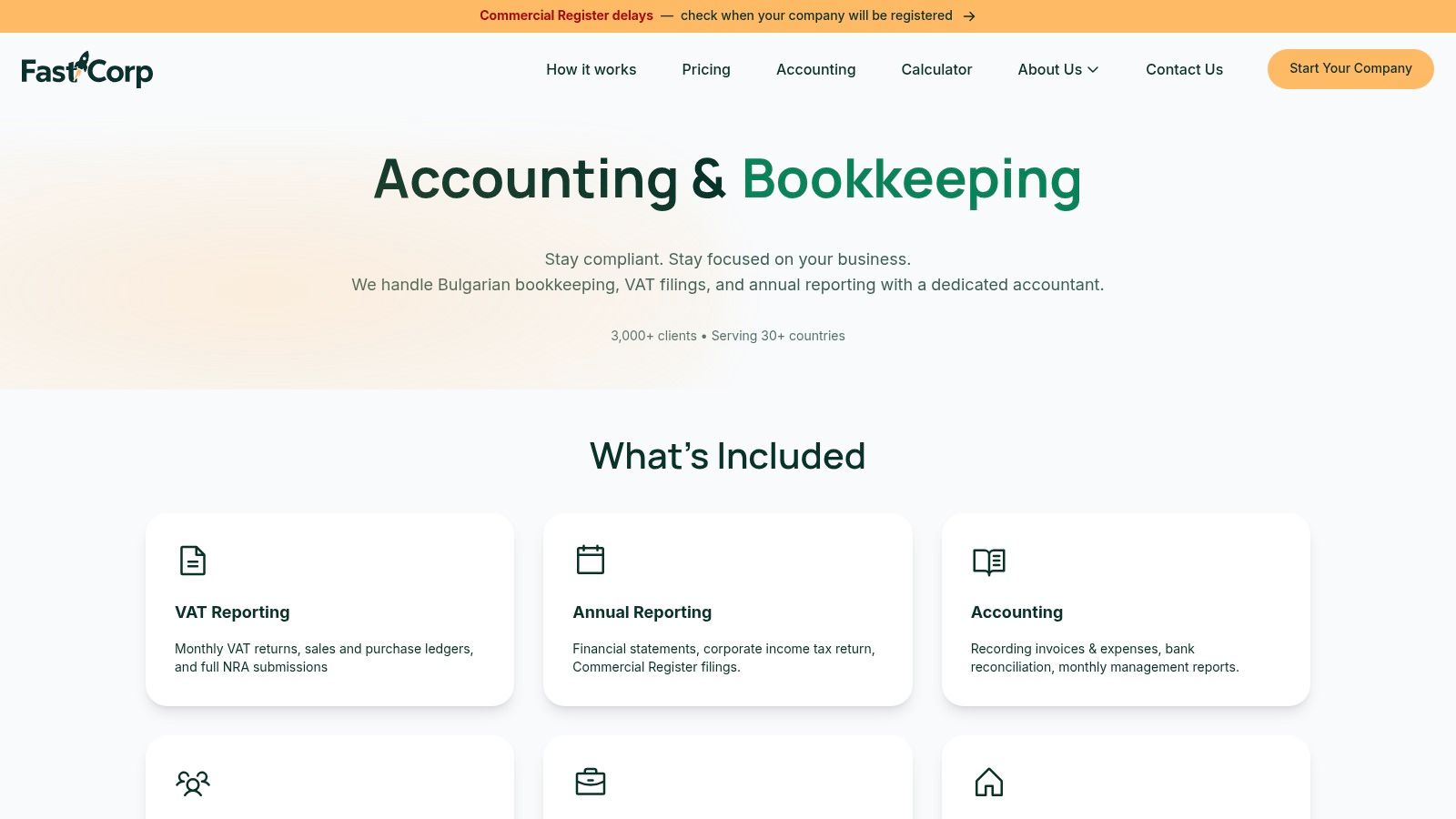
FastCorp's Accounting & Bookkeeping service is the only option on this list built around a Bulgarian EOOD or OOD, and that changes the order of operations. Invoices, expenses and bank activity are kept in books that already point toward Bulgarian VAT reporting, annual returns and statutory compliance, rather than cleaned up later from categories built for another tax system. If FastCorp also formed the company, registration, VAT and bookkeeping sit with one provider, which reduces handoffs when deadlines bunch up.
The calendar is the hard part. According to the Bulgaria VAT country guide on VATupdate, VAT returns are generally submitted every month regardless of turnover, and the return and any VAT payment are normally due by the 14th day of the following month. Electronic submission is mandatory through the National Revenue Agency's online system, and paper VAT filings are not accepted. A provider that keeps records current through the month is doing compliance work, not only data entry.
What You Get Each Month
- Bookkeeping and accounting: sales, purchase and bank records are maintained so filings can be prepared from complete ledgers.
- VAT reporting: routine VAT returns are prepared and filed electronically inside the monthly cycle.
- Annual returns and tax filings: year-end statutory reporting and corporate tax submissions stay in the same workflow.
- Optional payroll and compliance support: payroll administration and ongoing compliance can be added if you hire or want wider support after setup.
Our guide to business bookkeeping services explains how these pieces connect for non-resident founders. Bookkeeping fees depend on transaction volume and are confirmed during a free consultation, so get a scoped quote before comparing it with flat-fee tools.
Practical rule: Send every invoice and contract the week it is issued. Month-end batches create gaps right before the VAT deadline, and missing purchase invoices can turn a routine filing into a chase.
The trade-offs are modest but real. Payroll is optional rather than bundled, ongoing bookkeeping, tax and compliance support can be declined after setup, and ongoing services such as bookkeeping are not refunded for unused portions of a billing cycle. Many U.S.-built tools can keep tidy books, but they cannot file Bulgarian VAT or prepare statutory annual reporting. I recommend this as the default for a Bulgarian company because Bulgarian statutory work is the product here, while most tools on this list treat it as outside their lane.
2. Pilot

Pilot is a polished, startup friendly service, and I understand why founders love it. Essentials is listed at $99 per month, while Core starts at $299 per month billed annually, with onboarding that may cost one month of bookkeeping. Core adds a dedicated U.S. based bookkeeper and accrual accounting, and you can layer on tax preparation, payroll, AP and AR, and CFO services as you grow.
That growth path is strong for a U.S. startup. You get monthly bookkeeping in QuickBooks Online, clean financial reporting, and a team that understands venture backed companies. If you're running a Delaware corporation alongside your Bulgarian company, Pilot can keep the U.S. side investor ready.
Where It Falls Short for Bulgaria
Pilot's tax services are oriented to U.S. filings, so they don't replace Bulgarian statutory accounting, monthly VAT returns, or annual filings with the Bulgarian authorities. The cheapest tier also doesn't include a dedicated bookkeeper, which limits how much judgement you get on tricky classifications.
Use Pilot for a U.S. entity if you have one. Don't ask it to be your Bulgarian compliance system, because you'll still need a local provider to translate those books into Bulgarian ledgers and VAT treatments. That double handling usually costs more than starting with a Bulgarian first setup.
3. Bookkeeper360
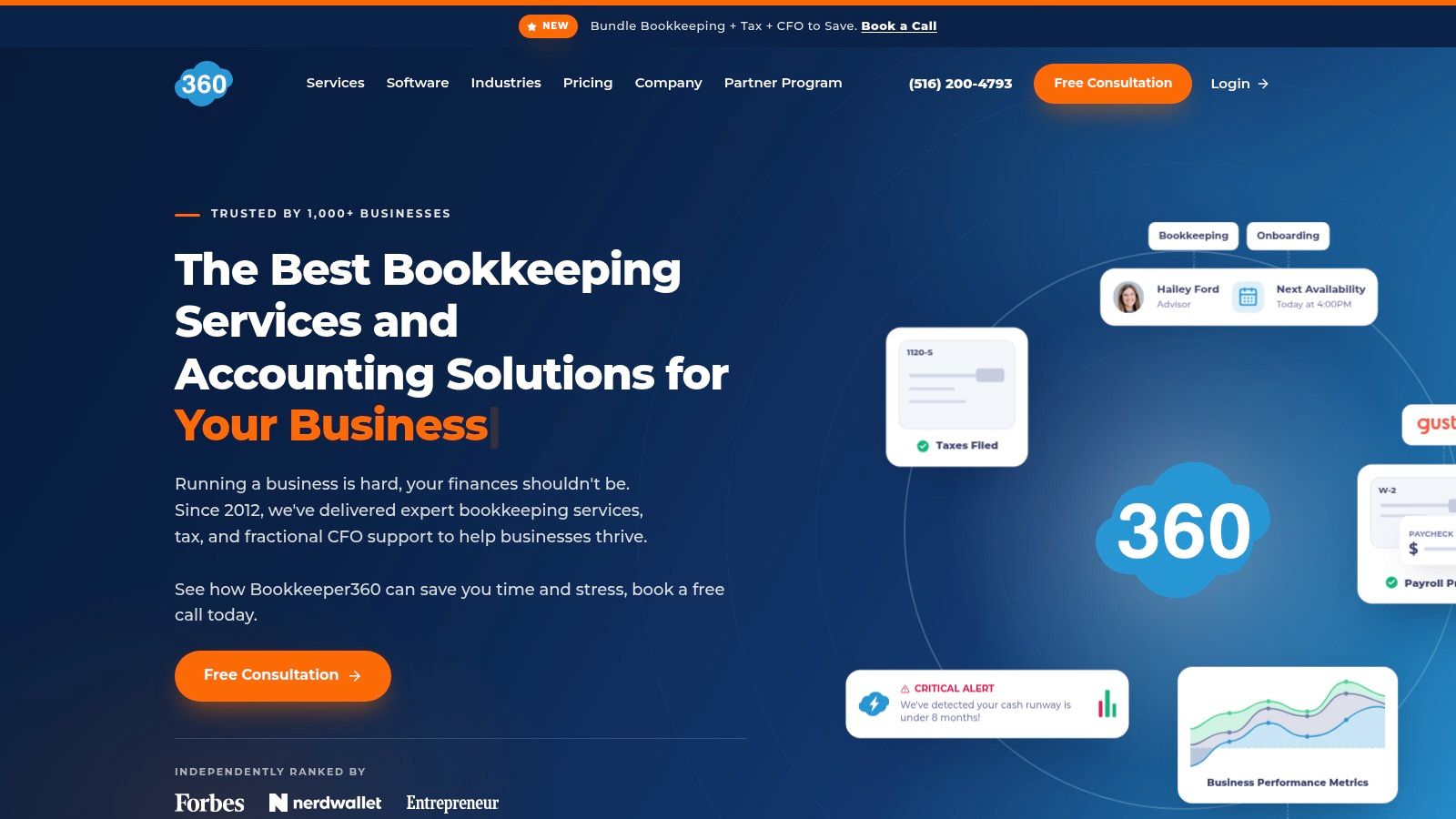
Say your books are six months behind and you need someone to clean them up while also handling payroll and tax. Bookkeeper360 is built for that kind of rescue work. Bookkeeping starts at $400 per month, catch up work starts at $1,000, and tax services start at $1,200 per year, with monthly or weekly bookkeeping on a cash or accrual basis.
The platform flexibility is a real plus. The U.S. based team works across QuickBooks, Xero, and Gusto, and produces profit and loss statements, balance sheets, and financial insights you can use. Optional services include tax, payroll, sales tax, bill pay, invoicing, and fractional CFO support, so you can coordinate several finance jobs through one provider.
Our bookkeeping software comparison is useful background if you're deciding which underlying platform you want a service like this to run.
- Strength: Catch up and setup help for incomplete books
- Strength: Works with several common accounting and payroll platforms
- Watch out: Tax and payroll cost extra on top of the starting price
- Watch out: Bulgarian statutory coverage must be confirmed in writing
For a Bulgarian entity, that last point is decisive. Bookkeeper360 doesn't present Bulgarian VAT ledgers, EU Sales Lists, or annual statutory filings as part of its offer. It's a capable U.S. finance department, not a Bulgarian one.
4. Xendoo

Xendoo earns points for transparency. Essential is $395 per month or $355 per month with annual billing, Growth is $695 or $625, and Scale is $995 or $895, with custom plans available. Tiers reflect monthly expenses, account counts, and integrations, so you can estimate your real cost before a sales call.
You get a dedicated bookkeeping team rather than pure self serve software, with weekly bookkeeping even on the entry plan. Higher tiers add modified accrual options, more integrations, and more frequent calls, and catch up bookkeeping gives you a defined route to bring historical records current. Tax services and fractional CFO support are available if you want them.
The limits show up as complexity grows. The lower plan is cash basis, and full accrual accounting may require a custom quote. Pricing climbs with business size and service requirements, which is fair, but it means the headline price isn't your long term price.
For Bulgaria, the bigger issue is orientation. Xendoo's tax and compliance services are built for U.S. small businesses. A Bulgarian company selling across the EU needs VAT treatment per transaction, customer location evidence, and structured invoice data, none of which a U.S. cash basis workflow is designed to produce.
5. doola

doola sells convenience, and for the right founder it delivers. Dedicated bookkeeping is listed at $1,999 per year, while Business in a Box is $2,999 per year or $329 per month. The bundle combines bookkeeping software, a bookkeeper, monthly reconciliation and reporting, and a dashboard for business records.
If you're a non U.S. founder running a U.S. LLC, the appeal is obvious. Formation, registered agent services, compliance reminders, and bookkeeping sit under one roof, which reduces the number of providers you have to chase. Everything is handled online, and the published bundle pricing makes budgeting easy.
Check the Extras Before You Buy
Standalone bookkeeping is priced annually, so you're committing upfront. Government and state fees may be additional, and you should confirm current inclusions carefully. Those are manageable points for a U.S. business.
They don't change the core mismatch for this list. doola's formation and compliance services are U.S. specific, not Bulgarian services. It won't register your EOOD, obtain your EU VAT number, or file with the Bulgarian National Revenue Agency. If your operating company is Bulgarian, doola solves a problem you don't have.
6. 1-800Accountant

Some owners want a person they can call. 1-800Accountant leans into that with a dedicated accountant, a client portal, and remote service across the United States. Its Business Complete plan is listed at $469 per month billed annually and includes full service bookkeeping, with bookkeeping beginning at 75 monthly transactions according to the provider.
Bundling is the attraction. Tax planning, tax filing, and payroll sit alongside bookkeeping in some plans, and catch up bookkeeping helps if you're behind. For a U.S. small business that wants bookkeeping and U.S. tax work from one team, that's a sensible package.
A bundled U.S. tax and bookkeeping plan still leaves Bulgarian VAT, payroll, and annual filings completely uncovered. Bundles only help when they bundle the filings you actually owe.
Read the limits closely. Full service bookkeeping is restricted to the higher tier plan, and you should confirm transaction limits, payroll scope, and fees for work beyond the included services. None of those questions matter for Bulgaria, though, because the core services are focused on U.S. tax and accounting. A Bulgarian company would still need a separate local provider for every statutory obligation.
7. inDinero

inDinero sits at the premium end of this list, and it's honest about who it's for. Essential starts at $750 per month, Growth at $1,250 per month, and Executive is custom priced. You're paying for a dedicated accounting team built for established or growing companies, not basic transaction reconciliation.
That premium buys depth. Growth includes accrual accounting and support for QuickBooks Online or NetSuite, and higher tiers can add revenue recognition, budget analysis, controller support, and CFO level input. If your reporting needs have outgrown entry level bookkeeping, inDinero is designed for exactly that step up. Monthly, quarterly, or annual pricing arrangements add flexibility.
- Best for: Complex, growing companies that need accrual reporting
- Best for: Teams standardising on QuickBooks Online or NetSuite
- Less ideal for: Lean companies that only need routine monthly books
- Less ideal for: Anyone who needs a firm price without a sales consultation
For a Bulgarian entity, confirm scope before you fall in love with the reporting. Non U.S. entity support and local statutory filings should be verified explicitly, because U.S. GAAP reporting doesn't produce Bulgarian VAT returns or annual statutory accounts. You'd likely run inDinero for group reporting and a Bulgarian provider for compliance.
8. Bench

Bench made done for you bookkeeping simple to buy. Grow starts at $199 per month, Core at $399 per month, and Core plus Tax at $599 per month, with annual billing also available. Plans include monthly books and year end financial packages, with profit and loss, balance sheet, and 1099 reporting, and the provider says reports can be exported.
For a small U.S. business, that clarity is appealing. You get a bookkeeping team plus software, tax ready year end packages, and a tax inclusive tier if you qualify. Our breakdown of accounting services pricing helps you compare that kind of tiered pricing against what a Bulgarian service includes.
Automation is reshaping this whole category. The 2025 Intuit QuickBooks survey of 700 U.S. accounting professionals found that 95% of firms had adopted automation technologies during the preceding year, with payroll processing at 47%, accounts payable and receivable at 46%, and data entry or transaction processing at 43%.
That context cuts both ways for Bench. Automated categorisation is now table stakes, so judge any provider on review quality and data portability instead. Confirm plan eligibility and inclusions for your specific business, and ask about data export and transition procedures before signing. U.S. reporting and 1099s don't replace Bulgarian accounting, so a Bulgarian company still needs local statutory coverage.
9. Merritt Bookkeeping
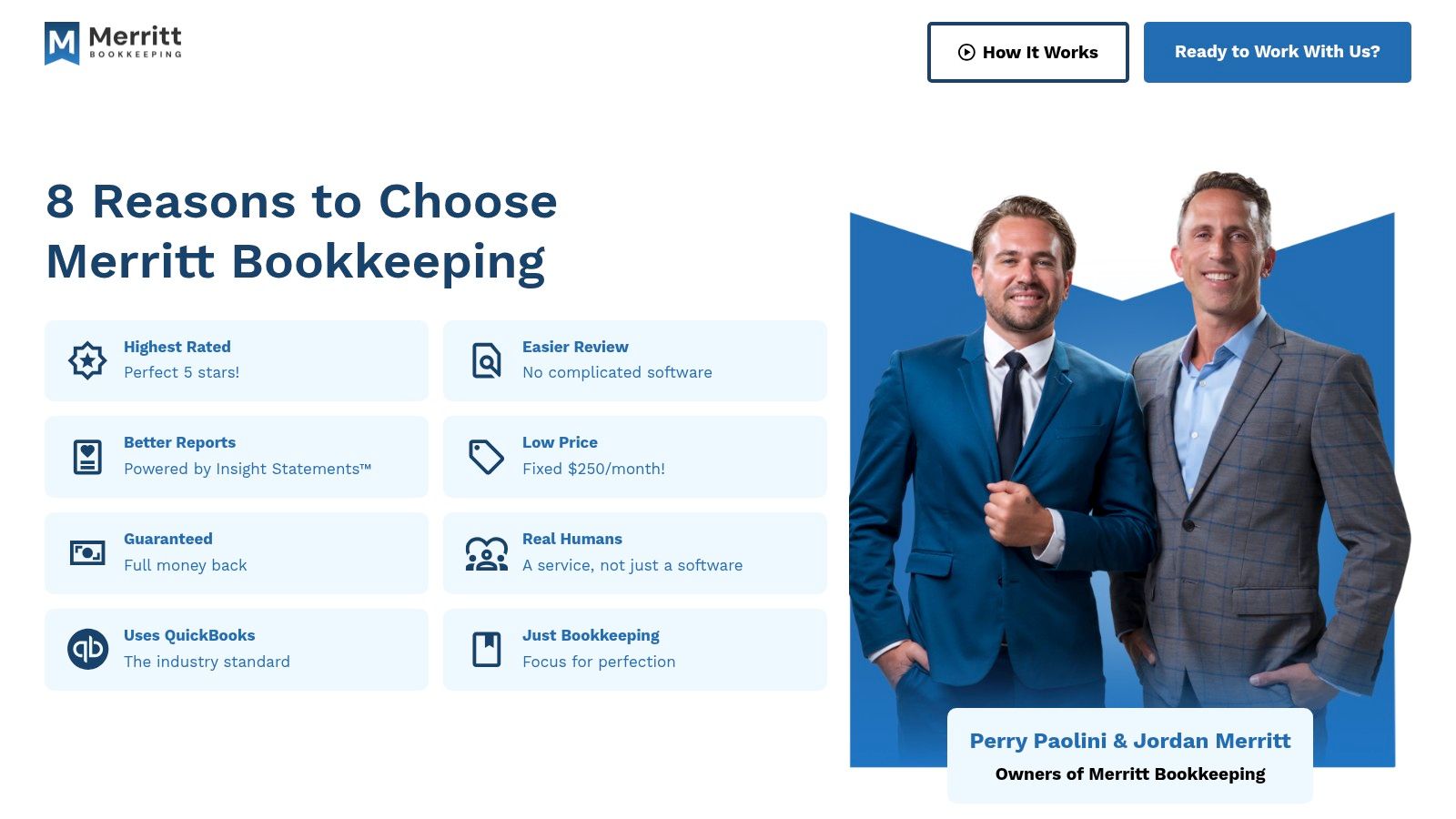
Merritt Bookkeeping does one thing and doesn't pretend otherwise. It uses QuickBooks to categorise transactions and produce financial reports, with catch up bookkeeping available if your books have fallen behind. Pricing isn't published as a fixed public tier, so ask Merritt directly for a current quote, the transaction limits that apply, and the reporting basis it uses before you commit.
That narrow scope is a virtue for a straightforward U.S. business. You aren't paying for a CFO package you'll never use, and QuickBooks based books hand off cleanly to a U.S. tax preparer or a new accountant if you outgrow the service. Routine categorisation and monthly reports are exactly what a small service like this is sized for.
Plenty of owners want precisely that relief. In OnPay's 2025 small business outlook survey, 30% of surveyed small businesses said bookkeeping was the top task they would find helpful to delegate. Merritt is built for that delegation.
The limits show up at the edges. Payroll, tax filing, and CFO level advice sit outside the core offer, so confirm what happens when your transaction volume grows. For a Bulgarian entity the gap is wider: a QuickBooks workflow built around U.S. expectations won't produce monthly EU VAT returns, Bulgarian payroll, or the statutory annual filings a Bulgarian company owes. I'd treat Merritt as a clean, low fuss option for a U.S. side entity only, and keep Bulgarian compliance with a provider built for it.
10. Tukel Accounting
Tukel Accounting has the most interesting niche on this list. It specialises in bookkeeping, tax, payroll, and fractional CFO services for non U.S. founders operating U.S. startups. If you live abroad and run a U.S. company, a firm that expects cross border questions is far easier to work with than one that doesn't.
That specialisation shows in the service mix. Bookkeeping, tax support, payroll, and fractional CFO help sit in one firm, and pricing can reflect your entity structure and transaction complexity. For an international founder with U.S. operations, that's a thoughtful offer.
The Boundary You Need to Respect
Pricing is quote based, with no simple public bookkeeping price, so expect a consultation before you can budget. That's normal for custom work, but it slows comparison shopping.
The decisive point for Bulgarian founders is jurisdiction. A U.S. startup specialisation doesn't establish that the firm handles Bulgarian statutory accounting, and it doesn't replace Bulgarian VAT, payroll, or annual filings. Tukel could complement a Bulgarian setup if you also run a U.S. startup, but it shouldn't be your only provider for a Bulgarian company. Keep each entity with a provider built for its own tax system.
How the 10 Bookkeeping Options Compare
| Item | Starting price | Service model | Bulgarian fit |
|---|---|---|---|
| Accounting & Bookkeeping | €229/month | Ongoing bookkeeping, VAT and annual reporting; optional payroll | Strong fit for Bulgarian businesses; includes local compliance support |
| Pilot | $99/month | Bookkeeping software with optional dedicated bookkeeper and finance services | Limited fit; U.S.-oriented tax services do not cover Bulgarian compliance |
| Bookkeeper360 | $400/month | Outsourced monthly or weekly bookkeeping with optional tax, payroll and CFO services | Limited fit; confirm Bulgarian statutory coverage |
| Xendoo | $395/month | Managed bookkeeping with tax, catch-up and CFO options | Limited fit; U.S.-oriented compliance, and full accrual may require a custom plan |
| doola | $1,999/year | Bookkeeping plus optional U.S. formation and compliance services | Limited fit; services are for U.S. entities, not Bulgarian accounting |
| 1-800Accountant | $469/month, billed annually | Full-service bookkeeping with U.S. tax and payroll support | Limited fit; focused on U.S. accounting and tax |
| inDinero | $750/month | Outsourced accounting with higher-tier accrual and controller support | Unclear fit; confirm support for Bulgarian entities and statutory filings |
| Bench | $199/month | Managed bookkeeping with reports and optional tax preparation | Limited fit; U.S. reporting and tax services do not replace Bulgarian accounting |
| Merritt Bookkeeping | $250/month | Basic outsourced, QuickBooks-based bookkeeping | Limited fit; U.S.-focused service may not meet Bulgarian requirements |
| Tukel Accounting | Quote-based | Bookkeeping, tax, payroll and fractional CFO services for U.S. startups | Limited fit; U.S.-focused and does not replace Bulgarian statutory accounting |
Choose the Setup That Keeps Your Bulgarian Books Compliant
Start with an honest list of what your company owes. Routine bookkeeping is only the first layer. Most Bulgarian companies also need monthly VAT work if they're VAT registered, payroll if they employ anyone, and annual statutory reporting that matches the monthly books. When you test business bookkeeping solutions against that full list, most U.S. built options on this page reveal themselves as partial answers.
That isn't a criticism of their quality. Pilot, Bench, Xendoo, and inDinero do U.S. bookkeeping well, and several publish pricing clearly enough to budget with confidence. The problem is fit. U.S. sales tax, 1099 reporting, and IRS oriented year end packages don't produce Bulgarian sales and purchase ledgers, EU Sales Lists, or filings with the National Revenue Agency.
Ask every provider the same questions in writing before you pay anything. Who prepares and submits the Bulgarian VAT return each month? Who checks VAT treatment on cross border sales? Who prepares the annual financial statements and corporate tax return? What happens to your data if you leave?
Founder check: If a provider can't name who files your Bulgarian VAT return and by what date, it isn't your Bulgarian bookkeeping solution, whatever the brochure says.
Look ahead, too, because EU bookkeeping is becoming more structured. According to the European Commission's VAT in the Digital Age page, the EU formally adopted the ViDA package on 11 March 2025, with a digital reporting system based on e-invoicing for intra EU B2B transactions scheduled to apply from 1 July 2030. A system that stores invoices only as PDFs may create compliance debt, so capture structured invoice fields, customer VAT numbers, tax points, and payment dates at source from now on.
That forward view also affects how you sell. The European Commission digital newsletter on ViDA describes how ViDA expands the single VAT registration and One Stop Shop approach and increases the role of electronic invoicing and structured data. In practice, your bookkeeping should classify each supply, record customer location evidence, and show whether OSS, IOSS, domestic registration, or platform collected VAT applies. Selling B2B services, digital services to consumers, and goods through a marketplace can each produce a different workflow for the same Bulgarian company.
Process discipline is what makes automation pay. The 2025 Financial Cents workflow study of 816 firm owners found that 64.3% of firms addressing workflow problems invested in workflow automation software, while 65.2% introduced structured processes, and only 59.2% said their initial improvement attempts were successful. Software alone isn't enough. You need chart of accounts rules, a VAT treatment matrix, approval thresholds, and human review for unusual VAT items, related party transactions, payroll anomalies, and month end adjustments.
There's a personal payoff when you get this right. According to Xero's small business reporting, in 2025 4 in 5 Xero customers surveyed globally said they saved 6 hours per month by eliminating manual data entry. Those hours compound fast for a lean founder team, and clean monthly books also make banking, fundraising, and due diligence far less stressful.
My recommendation is straightforward. If your operating company is Bulgarian, put a Bulgarian first provider at the centre and add U.S. specialists only for U.S. entities you run. If you're setting up a new company, we offer an all in one Online package at €1,750 covering registration, EU VAT number, bank account, virtual office, and government fees, handled fully online. Book a free consultation with us and we'll map your VAT position, transaction volume, and filing calendar before you commit to any bookkeeping package.
Ready to run your Bulgarian company without chasing deadlines, ledgers, and VAT returns yourself? FastCorp handles your bookkeeping, VAT reporting, annual filings, and payroll online, on top of fast Bulgarian company formation with an EU VAT number and banking support. Visit FastCorp to book your free consultation and get a bookkeeping setup built for Bulgaria from day one.